Your visit at a glance
- First taste
- Pineapple plain, then with tamarind and chilli
- Summer highlight
- Mangoes and the short lychee season
- Where to look
- Goodlands for a market; Mont Choisy for a beach stop
- Buying question
- Per piece, portion, bunch or weight?
Build a small tasting selection
For two people, choose one prepared fruit to share now and two or three whole fruits for breakfast. This gives you room to try another stall later without carrying a heavy bag through a hot afternoon. A pineapple portion, a ripe mango when available and a few jamalacs make a more useful introduction than buying everything on the table.
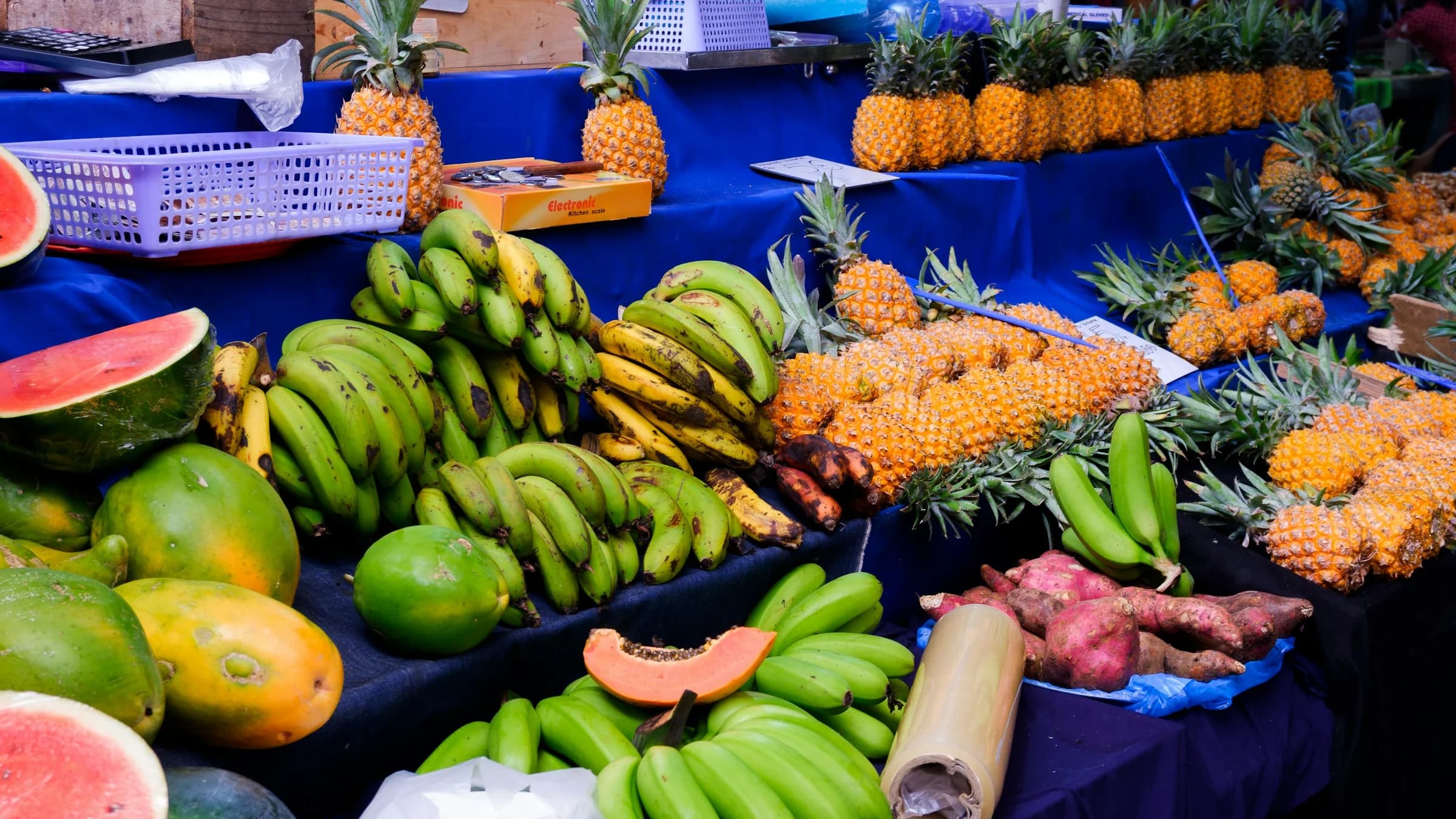
Mauritius grows bananas, papaya and pineapple as well as seasonal mangoes and lychees. A market can also sell imported fruit alongside the local harvest. Apples, pears and grapes on a stall do not tell you where the neighbouring mango was grown. Ask which fruit comes from Mauritius and which is best today. The answer is more useful than treating every colourful display as a local orchard's produce.
Start with pineapple and choose your seasoning
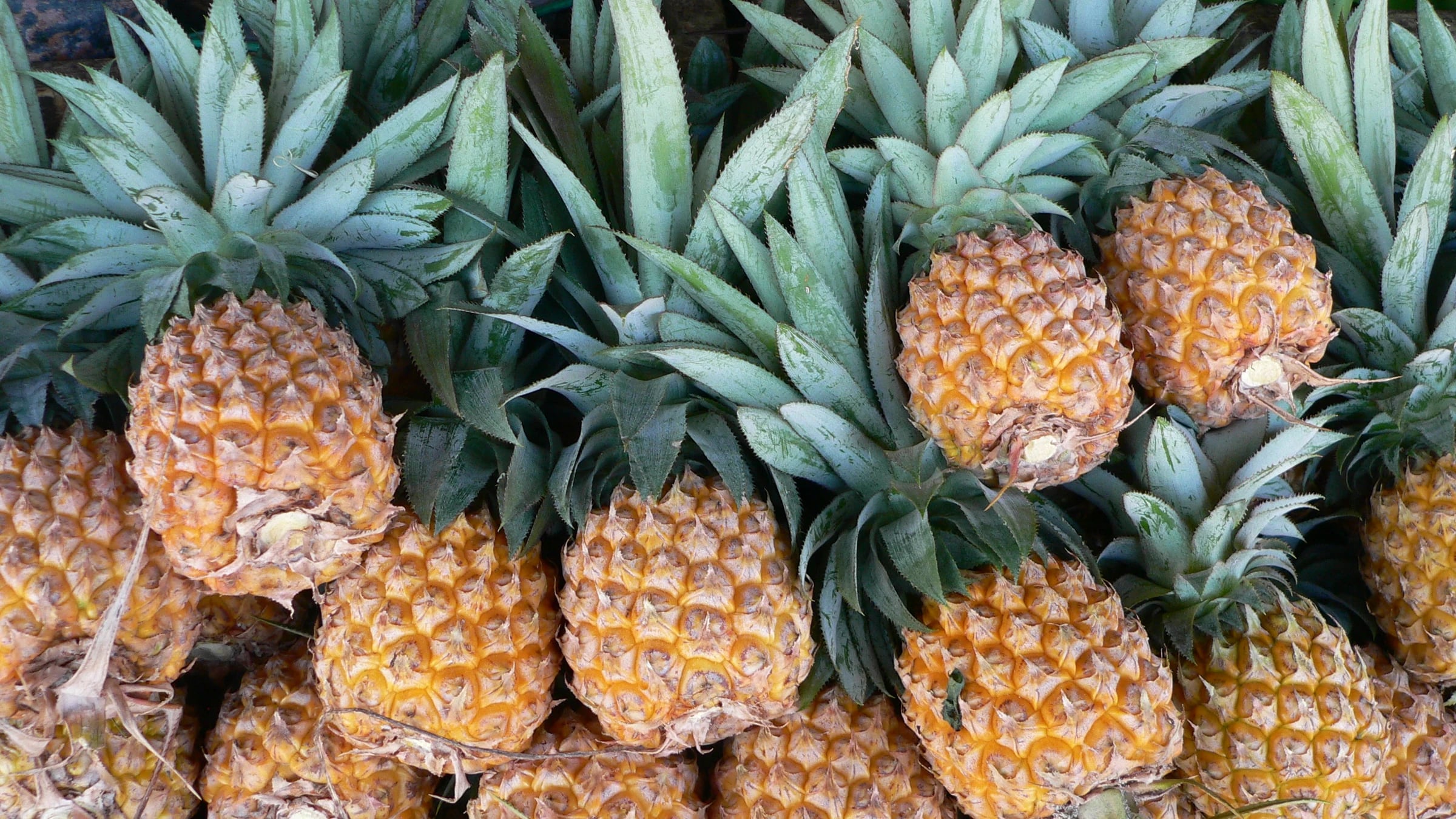
The Victoria pineapple is a good variety to recognise in Mauritius. Local growers cultivate this relatively small fruit, appreciated for its sweetness and aroma. Ask for the variety if that is what you want; size alone does not identify every pineapple on sale. For immediate eating, ask the seller to choose one that is ready and prepare a manageable portion.
Try a piece plain before adding anything. Salt, chilli and tamarind sauce bring a very different balance of sweet, sour and heat. This style of serving is documented by the tourism authority at Mont Choisy, another northern beach. Request a little sauce on the side for a first taste. For children, order their plain portion before the adult portion is seasoned, and make the request before cutting begins.
Buy mangoes for today or for later
Mangoes deserve a separate conversation with the seller. A fruit intended for eating tonight is a different purchase from one you want to keep for several breakfasts. Say when you plan to eat it, then ask for a suitable level of ripeness. Avoid squeezing every mango in the display. Let the seller show you the selection and reject fruit with leaking, broken or mouldy areas.
Ripe mango is soft, fragrant and suited to eating with a spoon or in slices. Green mango offers a firmer, sharper experience and can be sold with seasoning or used in pickles. Ask whether a prepared portion is ripe or green rather than assuming yellow seasoning means sweet fruit. The north and west are well suited to mango growing, according to the agriculture ministry, but a stall's location is not proof of the fruit's origin.
Recognise lychees and longans
Lychees, often written letchis locally, have a textured reddish shell around pale, juicy flesh and a central seed. Peel the shell and eat the flesh, leaving the seed. November and December are useful months to have them in mind, with harvest timing varying between varieties, places and years. Buy a modest amount and enjoy it promptly instead of planning to keep a large bunch through the week.
Longans have a smoother brown shell and a different, more delicate flavour. You may encounter them during summer, but they should not be treated as an interchangeable year-round replacement for lychees. Ask which fruit is being sold and what quantity the price covers. For a child, peel the fruit and remove the seed before serving an appropriately sized piece. Both fruits need more preparation than handing over an unpeeled banana.
Try jamalac, papaya and a few useful local names
Jamalac, also written jean malac, is a crisp, water-rich fruit that may be pink, red or pale. Its light sweetness is quite different from mango's richness. It is often served in pieces with tamarind, salt and chilli. Papaya, or papaye, offers soft flesh and a milder flavour. A whole papaya works well at accommodation where you have a knife, plate and refrigerator; a cut portion is more convenient during a beach stop.
A few names help you explore beyond these first choices. Grenadine means passion fruit in local produce vocabulary. Fruit de Cythère refers to golden apple or ambarella, while longane, carambole and fruit à pain mean longan, star fruit and breadfruit. Breadfruit is normally a cooking ingredient, so it is not a substitute for a ready-to-eat beach snack. Ask how an unfamiliar fruit is eaten before buying a large quantity.
Use seasons as a guide to what to ask for
Summer is the most rewarding starting point for mangoes and lychees, but there is no single island-wide opening date for fruit season. Weather, growing area and variety all affect the harvest. A late or small crop changes the display and the price. Choose what looks good that day instead of making a particular fruit the condition for a successful outing.
| Fruit | Useful expectation |
|---|---|
| Pineapple, banana and papaya | Major locally grown fruits to ask about throughout your stay |
| Mango | A seasonal summer highlight; ask about the current variety |
| Lychee | A short season, commonly associated with November and December |
| Jamalac, longan and other smaller crops | Availability varies; let the current stall selection guide you |
Order clearly at a market or beach stall
Goodlands is a useful market outing from Cap Malheureux; Mont Choisy offers a different setting for a beach fruit stop. Roadside sellers are another possibility when a suitable stopping place is available. Their presence and stock can change, so keep fruit shopping as a flexible part of the route. Do not stop on a narrow road simply because an attractive display appears.
Establish whether the price is per fruit, portion, bunch or weight. Ask for the total before the seller cuts or dresses the fruit, including any preparation charge. A photograph of a price board from another year is not a reliable budget. Small cash notes make a modest purchase easier, and a reusable bag protects loose fruit better than balancing it with wet beach belongings.
Choose whole fruit for later and cut fruit for now
Whole fruit gives you control over washing and preparation once you reach your accommodation. Wash it with drinking-quality water, clean your hands and use clean utensils. For a stall snack, choose fruit freshly prepared with clean equipment and ask for a separate plain portion if sharing with someone who avoids chilli. Salt and tamarind are flavourings, not substitutes for careful handling.
Keep cut fruit chilled when it will be eaten later. An insulated bag with a cold pack is useful for a picnic; a warm car boot is not storage. WHO recommends prompt refrigeration of perishable food, preferably below 5°C. If you have no way to keep a prepared portion cold, buy only what you will eat during the stop.
Pack a beach snack that stays easy to eat
For a short outing, take drinking water, napkins, a spoon or fork and a closed container for scraps. Bananas need little equipment; a whole pineapple needs much more. Keep soft mangoes and papaya on top of the shopping bag, separate from bottles and heavy groceries. Arrange a shaded eating stop before getting everything sandy.
Bring peel, seeds and packaging back to a bin. Fruit waste still creates litter and attracts animals when left beside the church, beneath a tree or along the shore. Buy a smaller second portion later if you are hungry again. That approach usually suits a day moving between Cap Malheureux, another beach and your accommodation.
The questions you’re asking
Which fruit should I try first in Mauritius?
Pineapple is a straightforward first choice. Taste it plain, then try a little tamarind and chilli separately. Add mango or lychee when in season, or jamalac for a crisp, lighter flavour.
Is all fruit sold in Mauritius grown locally?
No. Local harvests and imports can share the same stall. Ask about the origin of the fruit you are buying; a Mauritian market address does not establish where it was grown.
When is lychee season in Mauritius?
November and December are a useful broad planning window. The exact harvest changes with variety, growing area and the year's conditions, so availability may begin or finish outside that window.
Can I order fruit without chilli?
Yes, ask for a plain portion before it is prepared and request any sauce separately. This also lets you taste the fruit itself and control the amount of heat.
What is the easiest fruit to take back to an apartment?
Whole bananas and carefully packed mangoes are convenient. Papaya and pineapple are good choices when the apartment has preparation utensils and refrigeration. Buy for the number of meals you will actually eat there.
Sources and review
This guide was reviewed on 30 October 2026. Service times, sea conditions and access arrangements can change. Suggested durations are planning estimates.
- Mauritius Tourism Promotion Authority on northern beach fruit sellers
- Mauritius Tourism Promotion Authority on jamalac and local food
- Mauritius Ministry of Agriculture fruit production strategy
- Statistics Mauritius guide to local crop names
- FAREI annual research report 2023–2024
- Ministry of Agriculture strategy on fruit crops
- Agria on the Victoria pineapple grown in Mauritius
- FAREI market monitoring and selling units
- World Health Organization food handling guidance